



The call came at the worst possible time, just ahead of the games.
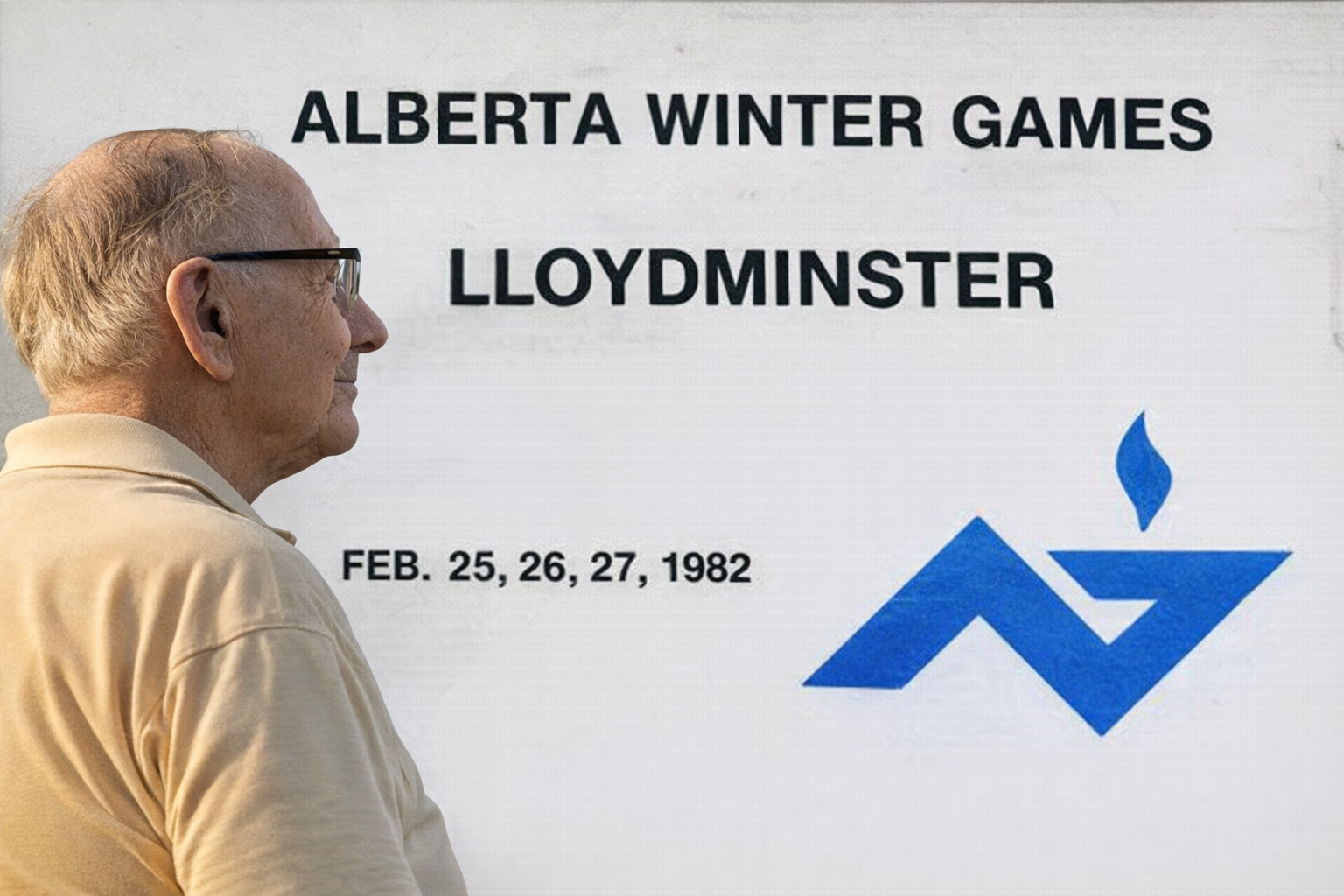
Vic Juba had spent the better part of two years building toward a single moment: the 1982 Alberta Winter Games, the largest event Lloydminster had ever attempted to host. Hundreds of volunteers had been signed up. Facilities had been upgraded. A budget of $436,000, staggering for a border city in 1980, had been painstakingly assembled.
And then, just before the opening ceremonies, the city’s employees went on strike.




“I thought, oh my God,” Juba, now 94, recalled recently. “Now what?”
What came next was a confrontation that Juba still talks about more than four decades later, a short, sharp exchange in a local cafe that tested everything he believed about community, leadership and the one quality he’d spent a career cultivating: the refusal to back down.

A city asked to do the impossible
When Lloydminster was awarded the winter games, few outsiders gave it much thought. It was a small city, split down the middle by a provincial border, better known for oil refineries than athletic facilities. But to the people who lived there, the games were something else entirely, proof that Lloydminster belonged on the provincial map.
The job of making that case fell to Juba, a training manager at Husky Oil who had quietly become one of the city’s most reliable volunteers. He hadn’t sought the chairmanship. The city’s recreation director, David Dymytryshen, had sought him out on the advice of Max Gibb, then managing director of Alberta Games.
“Find the strongest person that works in the oil industry that seems to be community-minded,” Gibb had reportedly told them.
Juba fit the description. He had joined the Lions Club in 1954, barely a year after arriving in Lloydminster as a young chemist who had planned to stay two years and leave. He never left. By the time the games came around, he had chaired public meetings, recruited specialists, navigated corporate boardrooms and learned, through hard experience, how to get a city to move in the same direction.
Still, the scale of the 1982 games was unlike anything he had taken on. Lloydminster had to upgrade Mount Joy for skiing and introduce luge, then a novelty sport that most residents had never seen. Volunteers were needed by the hundreds. Every logistical thread had to hold.
“It was scary,” Juba said. “It was really scary.”
But it was coming together. Volunteers were signing up in droves. The community was energized. And then the strike hit.
Four men in a cafe
The union’s business agent reached out and asked for a meeting. Juba agreed, and showed up at a local cafe with a colleague to find four men he didn’t recognize waiting for him.
The message they delivered was direct. Pressure the city to settle the dispute, they told him, or the union would shut the games down.
It was, by any measure, a serious threat. A work stoppage at that stage could have unravelled years of planning, sent athletes and officials home, and left Lloydminster with nothing to show for an enormous community investment. The men across the table appeared to believe Juba would fold.
They had misjudged their audience.
Juba had lived through a 13-week strike at Husky Oil in 1976-77. He knew what a labour dispute looked like up close, knew the rhythms of brinkmanship, and knew that a threat only carried weight if the person receiving it believed it. He did not.
“I said, Gary, I’ll tell you right now, the games are going to go on schedule,” he told the business agent. “We’re going to have all the volunteers there, and I’ve got thousands of people that are not going to back off because of you and your strike.”
He leaned forward.
“So I say to you, you get it solved. Because it’s going to go on regardless.”
There was a pause. The men had expected negotiation, or at least hesitation. What they got instead was a man who had organized the largest volunteer mobilization in the city’s history and was not prepared to let it dissolve over a labour dispute he had no power to directly resolve.
“You picked the wrong guy, Buster,” Juba said. “I’ve been there.”
Two days
The strike was settled within 48 hours.
Juba doesn’t take credit for the resolution itself, that happened between the city and the union, through channels he wasn’t part of. But he is certain the message he sent in that cafe mattered. The union knew that shutting the games down would not produce the leverage they were looking for.
They blinked, Juba recalled. They knew he wasn’t kidding.
What followed surprised even him. City employees, relieved the dispute was behind them, flooded volunteer registration desks. Workers called to offer their trucks, their time, their help.
“They were so happy that the strike was over so they could get involved,” Juba said. “The very people who had been on strike.”
What the games proved
The 1982 Alberta Winter Games went ahead on schedule. Luge ran at Mount Joy. A last-minute $10,000 grant secured through MLA Bud Miller covered the chalet shortfall. Juba stated Approxmately 2400 athletes showed up to participate with nearly 2800 volunteers in support.
For Juba, the confrontation in that cafe was never the headline. But it was the hinge, the moment when the games either survived or didn’t. Someone had to walk into that room and refuse to be moved.
“I’ve been through this,” he said. “Challenge me, see what happens.”