



Minimum wage is set to rise in several parts of Canada on April 1, but workers in Alberta will see no change.
Several provinces and the federal government adjust minimum wage annually based on inflation. The increases will affect thousands of workers in Atlantic Canada and federally regulated industries such as banking, telecommunications, and transportation.
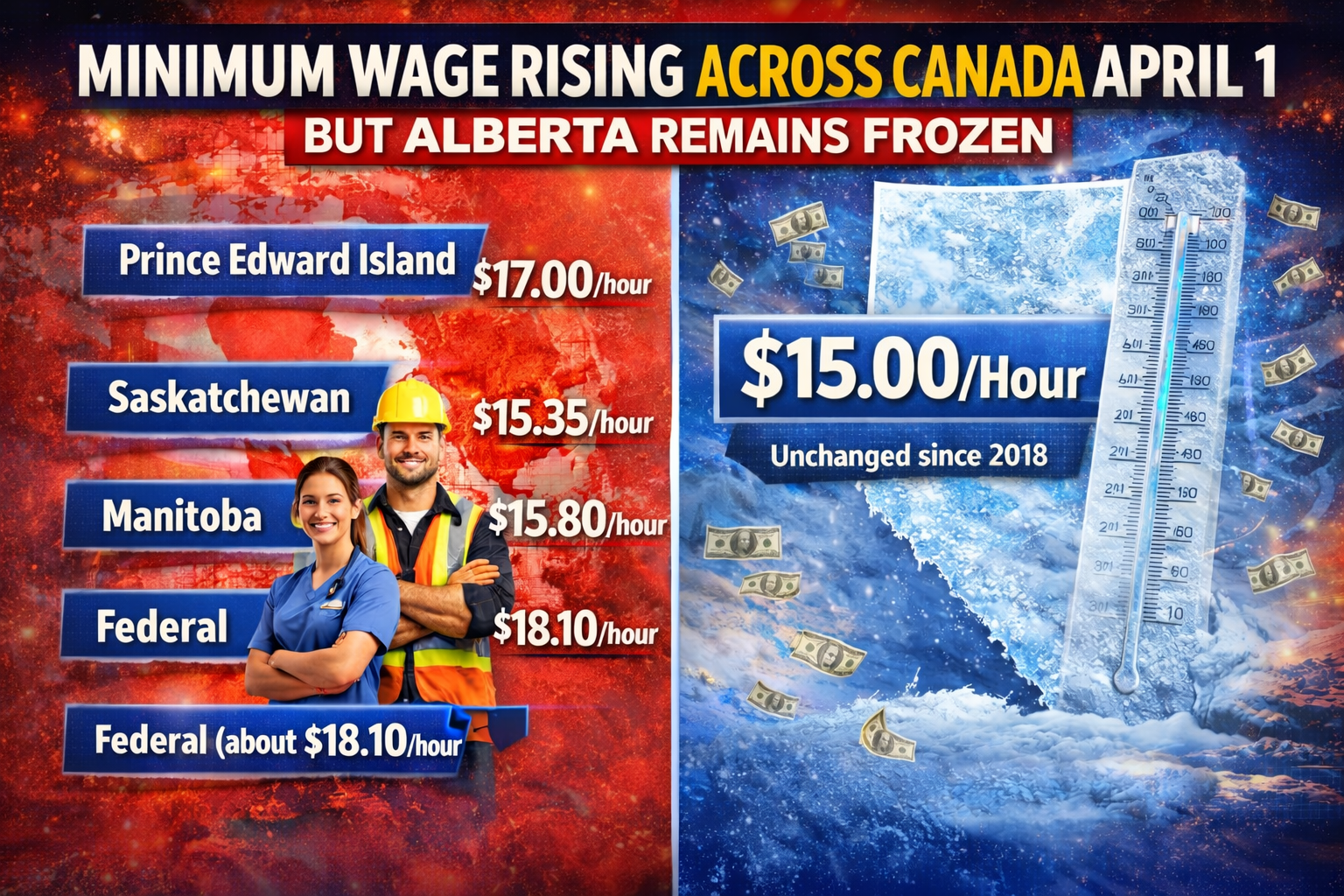
Alberta’s minimum will remain at $15 per hour. It has been frozen at that level since 2018.




Across the country, the numbers vary.
Prince Edward Island will increase to $17 per hour, the highest in Atlantic Canada. Nova Scotia will rise to $16.75 per hour on April 1, with another increase planned later in the year to reach $17.
Newfoundland and Labrador will increase to $16.35 per hour. New Brunswick’s minimum wage will reach $15.90 per hour. Yukon will rise to about $18.51 per hour.
The federal average, which applies only to workers in federally regulated sectors such as airlines, railways, and banks, is expected to rise from $17.75 to about $18.10 per hour.
Even with the increases, economists say minimum wage in many parts of Canada remains below what is considered a “living wage,” which can exceed $25 per hour in some cities.
Online reaction
Reaction online included concerns about job losses and inflation.
“Many companies will close or reduce staff. Many people will be unemployed soon after,” wrote Cathy Karvelson in response to a social media post about the increases.
“More inflation coming!” wrote Andre Dutchy.
Another commenter criticized government pay increases, writing federal ministers were expected to receive raises while many Canadians struggle with rising costs.
What economists say
Research into these increases has generally found only small impacts on overall inflation.
Studies across North America have shown that when minimum wage rises by 10 per cent, overall prices in the economy typically increase by less than one per cent. In many cases, the price changes are limited to labour heavy sectors such as restaurants.
Economists also note only a small portion of the workforce earns the lowest amounts, meaning the impact on the broader economy is limited.
Higher wages for lower income workers also tend to circulate quickly back into local economies, as those workers spend most of their income on everyday goods and services.
Alberta remains unchanged
While several provinces adjust minimum wage annually, Alberta has kept its rate at $15 per hour since October 2018.
At the time, it was among the highest in Canada. In the years since, other provinces have gradually moved closer or surpassed it.
Debate over whether Alberta should increase its minimum wage continues, particularly as the cost of living has risen across the country.
Read more: Alberta RCMP provide tactical support in Tumbler Ridge