



A weekly opinion on things that matter to me and hopefully to you, the hardworking citizens of Lloydminster and surrounding area. – Dan
In mid-April, I was at a local service club meeting when someone made a simple observation. Have you ever considered going to print? There are seniors in the homes who could really use knowing what’s happening in their community.
It wasn’t the first time I’d heard something like that since Lloydminster lost access to decades old physical news sharing in late March. In the weeks that followed, I heard variations of the same thing from seniors across the community.
They weren’t complaining about digital journalism. They weren’t demanding anything. They were noting that something had quietly disappeared from their daily lives. A connection to their community.




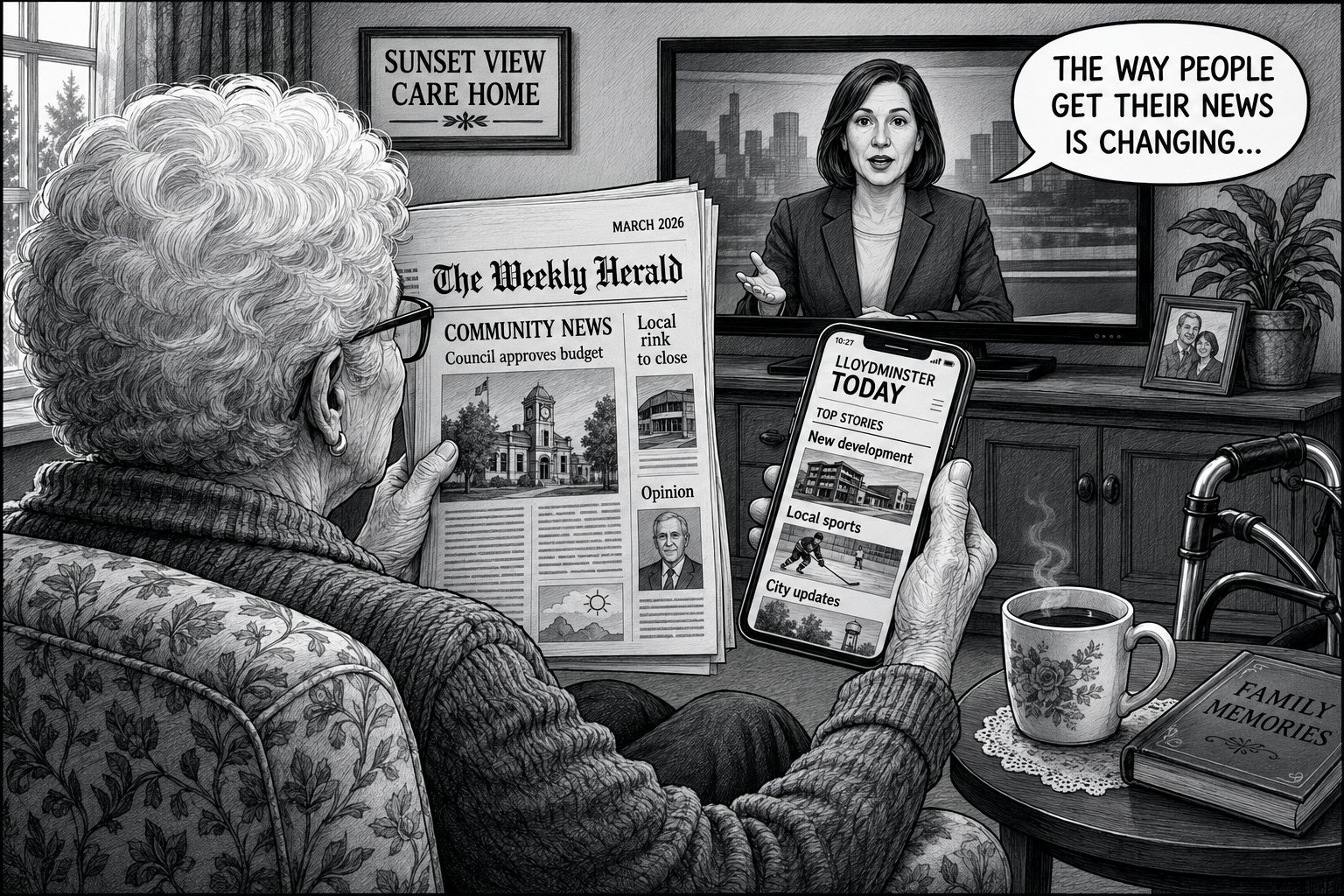
For many seniors, particularly those living in care homes, a physical newspaper isn’t a lifestyle preference. It’s the only realistic way to stay informed about what’s happening in the place they’ve called home for decades. They aren’t scrolling through social media. They aren’t navigating multiple websites. They aren’t receiving push notifications on a smartphone. They read a paper. Or they used to.
That observation, heard from multiple people in multiple conversations, is why BorderPulse launched a weekly print edition. One hundred copies every week, distributed to care homes and select other locations across Lloydminster. It wasn’t a business decision first. It was a community decision first. But it raised a question I haven’t been able to stop thinking about.
If a senior in a care home can no longer access a print newspaper and cannot realistically navigate the digital channels that now carry important community information, are they being reached?
That question has a legal dimension that matters to every resident in this city. Section 159.1(2) of the Lloydminster Charter requires that Council be satisfied that the chosen advertising method is likely to bring matters to the attention of substantially all residents in the affected area.
Public notification isn’t a procedural formality. It’s a promise to residents that decisions affecting their homes, their neighbourhoods, their taxes, and their community will be communicated in a way that actually reaches them. Substantially all of them.
Not substantially all residents are comfortable navigating digital platforms. Not substantially all residents under 55 with reliable internet access. Substantially all residents. Including the person inside Long Term Care who used to read the paper cover to cover and now wonders what she’s missing.
Public hearings are the moment residents have the legal right to speak about decisions affecting their community. That right means nothing if residents don’t know the hearing is happening.
I started BorderPulse because I believe local journalism matters. I started printing because a community member reminded me that not everyone gets their news from a screen.
I keep asking this question because I believe residents, all residents, deserve to know what their city is doing. That includes the woman in the care home. The senior in the waiting room. The longtime resident who has never owned a smartphone and never will.
Substantially all residents. Does the current process reach them? That question deserves a public answer.
Read more: Opinion – Teens these days.