



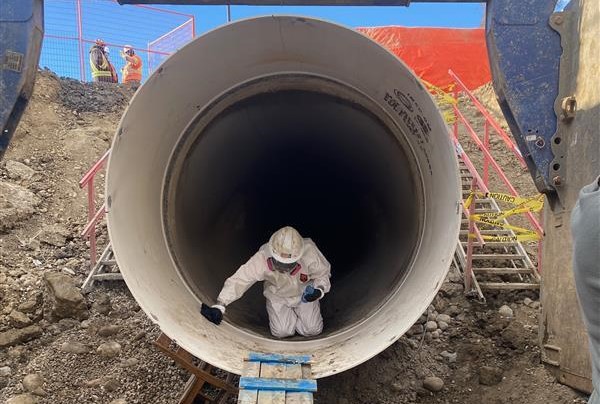
Calgarians watched it happen. Lloydminster councillors are making sure it doesn’t happen here.
City council voted unanimously Monday to award a $1,049,462 contract to McElhanney Ltd. to conduct the first-ever internal inspection of the city’s raw water pipeline, a 40-year-old steel line that serves as the only source of water flowing to Lloydminster’s treatment plant.
Mayor Gerald Aalbers drew the comparison directly.




“We’ve all watched the news in Calgary,” Aalbers said. “A water line is critical infrastructure. Can’t put it any simpler than that.”
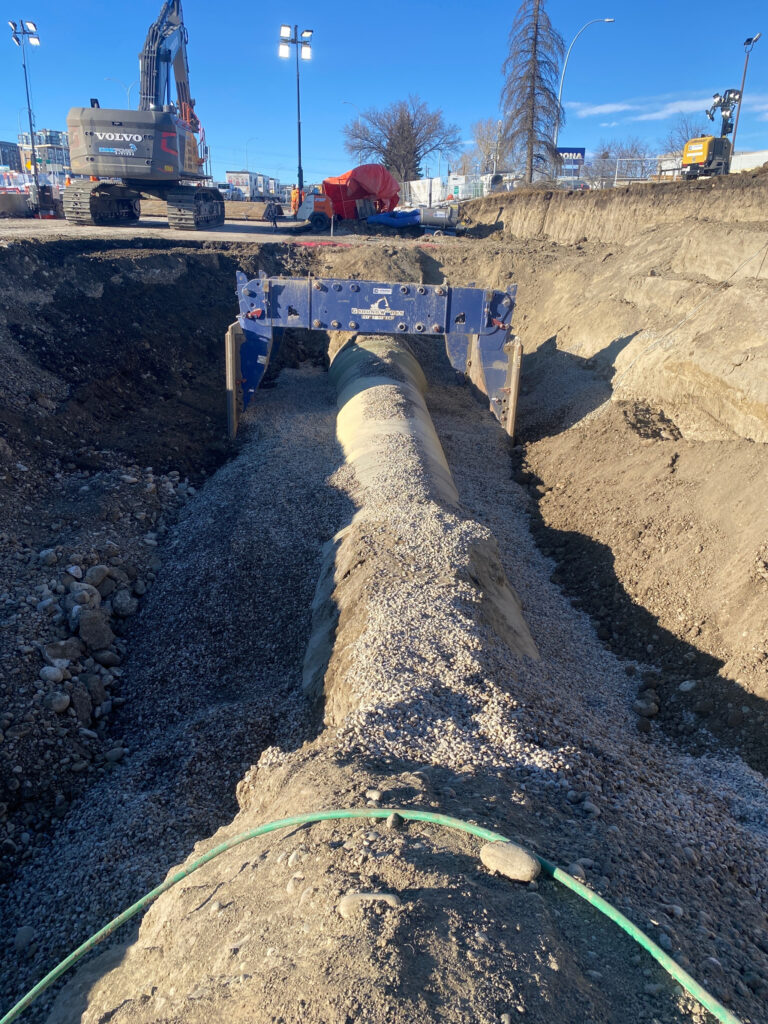
The pipeline runs approximately 36 kilometres from a North Saskatchewan River intake to the water treatment plant. It has been in service since 1984 and has never been inspected from the inside.
Councillor Michele Charles Gustafson pressed administration on exactly what is at stake.
“It is our only source from the river,” Charles Gustafson said. “If that line went down, what type of lead time do we have before we don’t have fresh water for residents to consume, use, drink?”
Teague Smith, presenting on behalf of administration, said the city’s raw water reservoir holds 188,000 cubic metres of storage. Previous repairs to the line took five days to complete with no service disruption. Water restrictions could extend that window further if needed.
“Keeping the infrastructure in working order for this essential service is really, really important,” Charles Gustafson said. “That’s why this comes to this table.”
Councillor David Lopez asked administration to walk through how the inspection actually works.
Smith explained that McElhanney will insert a free-swimming tool at the river intake. The tool travels with the natural flow of water through the pipeline, collecting data on structural condition, deterioration, air pockets, and potential leaks all the way to the treatment plant. A smaller pre-inspection tool, included as a value-added component worth $122,588, goes in first to identify any debris or restrictions before the main equipment is deployed.
“Without the add-on, the risk of a tool getting stuck increases,” said Jamie, a city water systems manager. “This helps reduce that and gives us some confidence before the main inspection.”
Lopez said the explanation cleared it up.
“I just assumed from the start it was going to be a pig that goes through the pipeline,” he said.
Councillor Michael Diachuk asked about worst-case scenarios. Smith said cement-lined steel pipelines are known to last 70-plus years, and the city expects the line to be in good condition. The assessment will identify any areas of concern down to the individual pipe joint.
Coun. Justin Vance asked whether the Cenovus portion of the raw water system, which branches off near the treatment plant, would also be inspected. Administration confirmed that line is a different style of pipe, constructed in 1999, and is not part of this assessment.
Vance also confirmed there will be no interruption to water service during the inspection, which will run while the system remains fully operational.
The over $1 million project is split equally between the city’s Water and Wastewater Services Capital Reserve and a third-party contribution. The contract to McElhanney includes a 15 per cent contingency of $157,419.
Once the report is complete, administration will return to council with findings. Any problem areas identified will drive future capital programs, integrity digs, or spot repairs.
Aalbers called it the kind of project that doesn’t get attention until something goes wrong.
“It’s that unsexy piece that nobody sees,” he said. “But when the water doesn’t flow tomorrow morning, every one of us will hear about it.”
Read more: Council brings public pushback to $72K art project vote