



Lloydminster residents will start getting notified when a dangerous dog moves in nearby, under a new bylaw city council advanced Monday.
Council gave first reading to Bylaw No. 15-2026, the Animal Control Bylaw, at its July 20 meeting. The bylaw replaces the seven-year-old Domestic Animal Bylaw and introduces a formal notification process for dogs declared restricted after an unprovoked attack.






Andrew DeGruchy, the city’s director of public safety, said the update follows a Governance and Priorities Committee meeting on June 15, where councillors first raised concerns about how the public would learn a dangerous dog was living nearby.
“With it being a new introduction, we just haven’t navigated through it yet,” DeGruchy told council.
How a dog becomes ‘restricted’
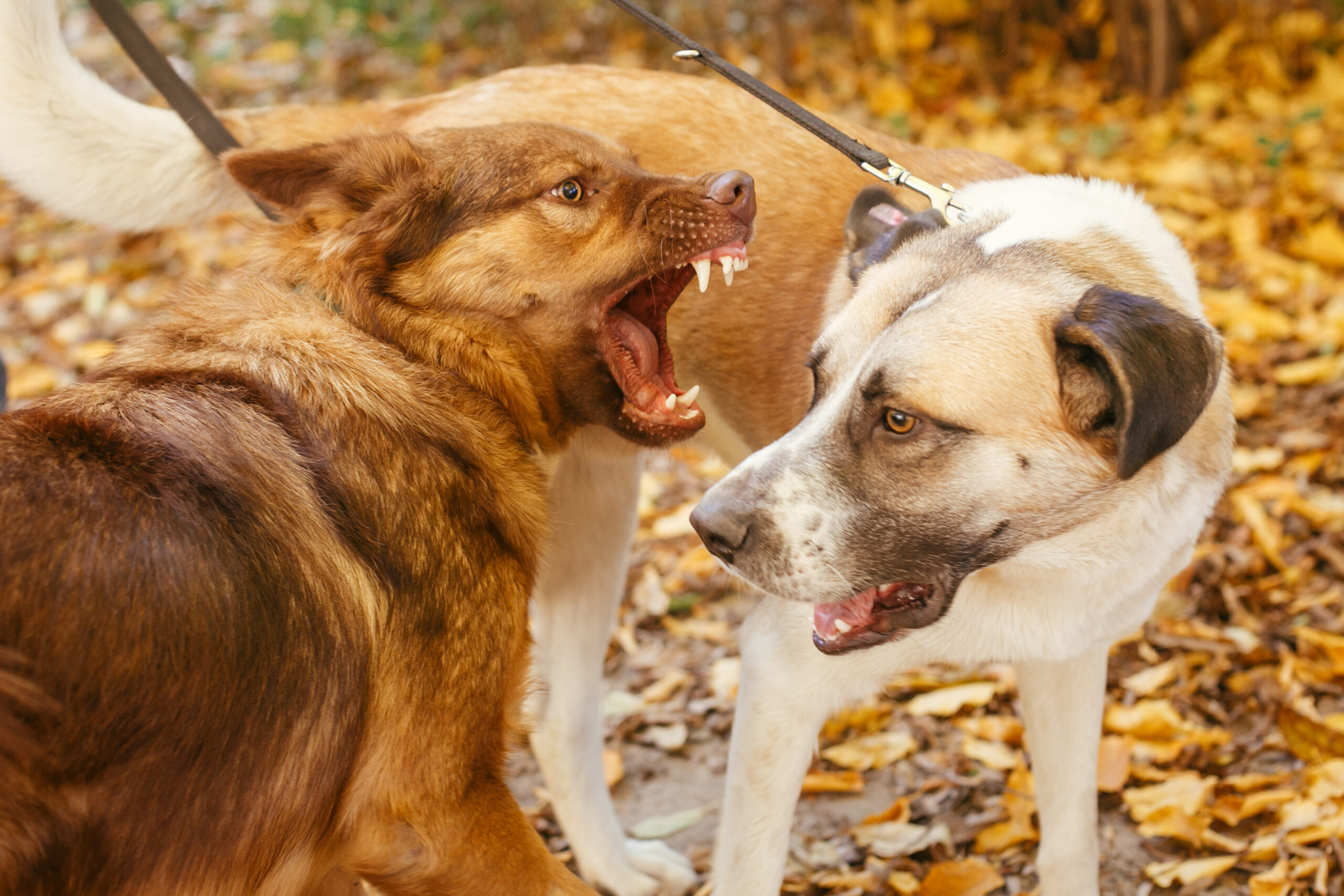
Under the bylaw, a dog can be declared restricted after two confirmed unprovoked attacks within 12 months, or after a single observed incident of vicious behaviour. There is no breed list.
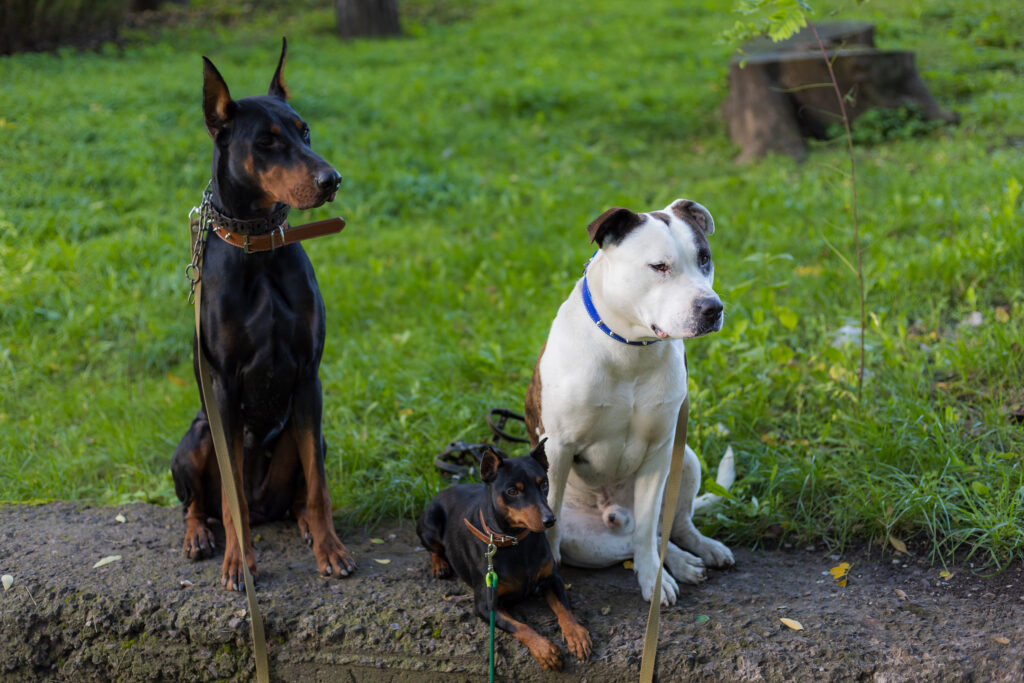
“We do not have any breed restrictions within the city,” DeGruchy said. “It would be following observations from a complaint or a bylaw enforcement officer. Where we’re seeing some sort of an unprovoked attack, that specific dog would be deemed restricted, not necessarily a breed.”
Restricted dogs must be muzzled and leashed in public, and kept indoors or in a secure, buried-fence enclosure at home. Owners face fines up to 5,000 dollars if a restricted dog attacks someone, and could be ordered to pay damages, surrender the dog for destruction or remove it from the city.
As of the June 15 meeting, DeGruchy said the city had two or three dogs currently carrying the restricted designation.
“Sometimes people choose to transfer that dog out of the community, or they surrender it to us or the pound keeper for euthanization,” he said. “So we see the number fluctuate a little bit.”
Where the notice idea started
The push for a notification system began at the June 15 committee meeting, when Coun. Jason Whiting, now Lloydminster’s deputy mayor, asked whether neighbours would ever be told a restricted dog was living on their street.
“When a dog gets deemed restricted, do the neighbours know? Is there a notice that goes out?” Whiting asked. “I don’t want to blatantly go out everywhere and say that there’s a dog, but I just wanted to know if there’s a way to identify it, in case there is a negligent dog owner.”
Whiting pointed to a recent dog attack in Edmonton as part of what drove his concern.
“There was a story not too long ago in Edmonton about a dog,” Whiting said. “It makes me concerned. If you know that the dog is dangerous, there should be some control.”
Not every councillor was convinced a formal system was necessary. Coun. Michael Diachuk compared it to how the public learns when a released offender moves into a community.
“When serious offenders are released from prison, it’s made public,” Diachuk said. “I’m not sure that we need to really mull it over too hard about a dog in the community.”
DeGruchy told council in June his department would look at options, including notifying only adjacent property owners or setting a fixed radius.
“Our team will take that away from a process perspective, as opposed to into the bylaw, just to see how we could implement at least the adjacent landowners or a 50-metre radius or something,” he said.
By the time the bylaw came back for first reading on July 20, that work had produced a change: a requirement that a designated bylaw officer create a written public notice for properties near a restricted dog’s home address once the designation is made.
A matrix, not a fixed distance
At the July 20 meeting, Coun. Michele Charles-Gustafson pressed for more detail on how wide that notice would go, noting the city is far more specific elsewhere in its bylaws.
“I know that we are quite specific in things like our Land Use Bylaw, about 200 metres this, 100 metres that,” Charles-Gustafson said. “Why were we not as specific into the proximity of who gets a notification in the neighbourhood?”
DeGruchy said the city plans to base the notice radius on the Dunbar Bite Scale, a six-level tool used by animal control officers and veterinary behaviourists to grade the severity of a dog bite, from no skin contact at Level 1 up to a fatality at Level 6.
“Right now, when we do respond or investigate dog bites and attacks, we use what’s called the Dunbar Scale, that looks at the severity of the bite,” DeGruchy said. “We want to utilize that Dunbar Scale with the proximity.”
He gave an example of how the scale could shape who gets notified.
“An animal that had two Level 1 attacks, where there’s no puncture, it was unprovoked but there’s no puncture of the skin, maybe it’s just the immediate landowners that we’re notifying,” DeGruchy said. “Versus a dog that maybe has had only one instance, but it was a Level 6 on the Dunbar. It had large puncture wounds, bruising and some shredding. Maybe we’re telling the whole block about that dog.”
DeGruchy said the city intends to handle that scoring through an internal standard operating procedure rather than writing exact distances into the bylaw itself, so the response can be matched case by case to how serious the attack was.
Charles-Gustafson said that approach addressed her concern, as long as residents understood the reasoning behind it.
“I appreciate that detail. I think that’s really important,” she said. “I know it doesn’t have to be in the bylaw, but it’s important for people to know that it’s not an ad hoc decision. There will be a matrix, there will be a filter about who, why, what, and then who gets notified. Because the only thing I was thinking of is, does it create some neighbourhood tensions? If it’s ad hoc, how come they got notified and I didn’t?”
What else is in the bylaw
Beyond restricted dogs, the new bylaw sets a household limit of five dogs, five cats or one restricted dog per residential property. It requires dog and cat tags for animals over six months old, though it stops short of requiring microchips.
Coun. Jim Taylor asked whether the bylaw would let enforcement officers check for embedded chips.
“There would be nothing within our bylaw that requires any type of microchipping,” DeGruchy said. “We just need a physical tag that our peace officers or bylaw officers can interact with and see, but the pound has talked about the benefits to microchipping. We just want to leave it with that animal owner, if they choose to microchip or not.”
The bylaw also formalizes a 72-hour minimum hold period at the city’s pound, operated under contract by Border Paws Animal Shelter Society, and sets fines ranging from 50 dollars for an untagged pet to 1,500 dollars for abandoning an animal in the city.
The bylaw does not bring back mandatory pet licensing. The city dropped its paid licensing program in 2019, and DeGruchy said that isn’t changing.
“I will note this does differ from a formal licensing program or a paid licensing program, which the city moved away from in 2019,” DeGruchy said. “We are, however, working with Border Paws Animal Shelter Society on a voluntary licensing program, just to help with some revenue generation for the facility.”
Council voted to grant first reading to Bylaw No. 15-2026 on a motion from Coun. Justin Vance, seconded by Coun. Jim Taylor. The bylaw still requires second and third reading before it takes effect and repeals the existing Domestic Animal Bylaw.
Read more: Lloydminster eyes e-scooter rules as safety concerns grow