




This is the weekly opinion column by owner/founder of Border Pulse.
Ten days before council learned its own 140-item corporate plan might not survive a flat budget, it was already committing to two more projects.
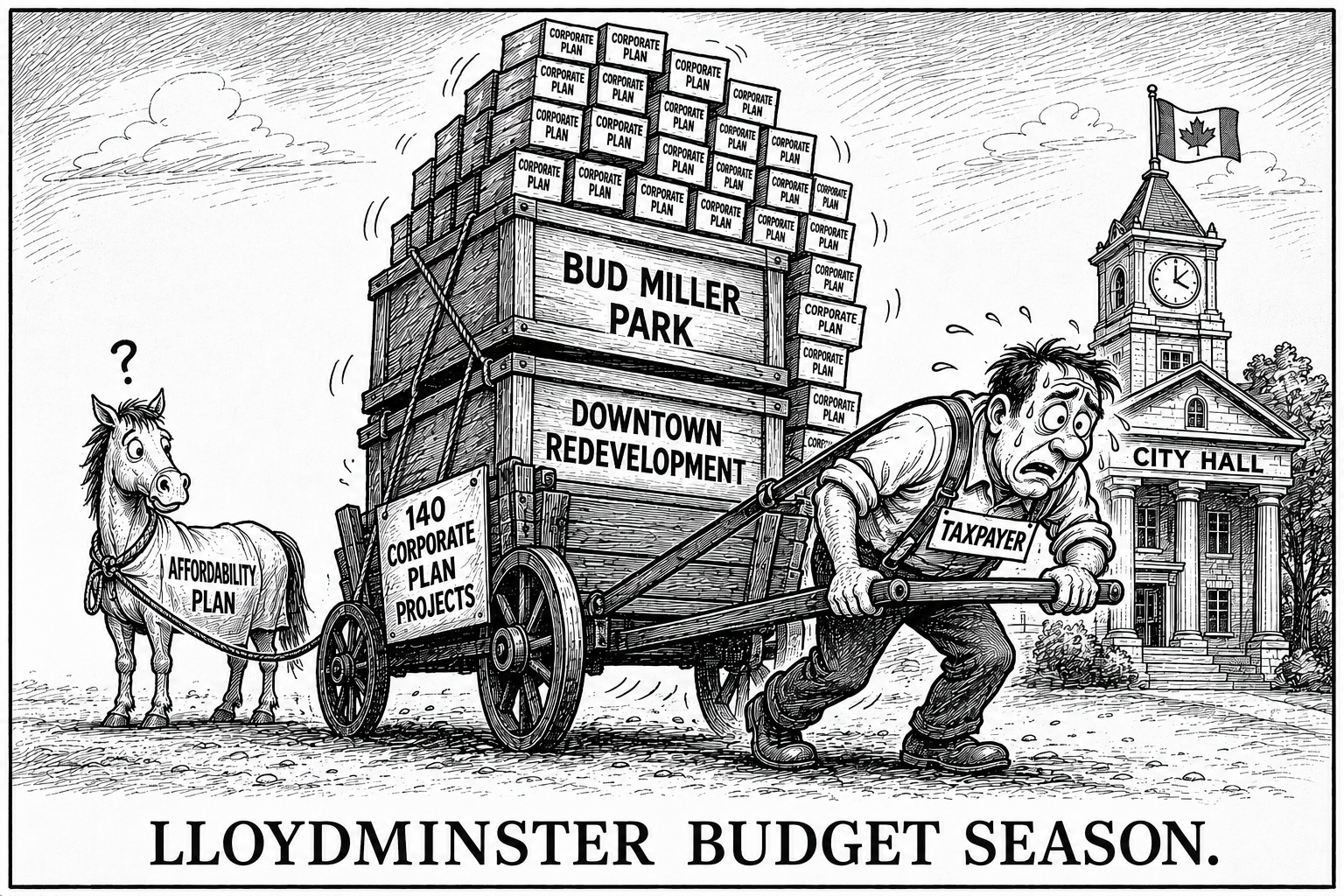
Call it what it is. The city put the cart in front of the horse, and taxpayers are the ones expected to pull both.






In July, council voted to apply for federal Build Communities Strong Fund grants covering a Bud Miller Park redesign and the next phase of downtown redevelopment. Both were sold as smart moves, and in fairness, both projects were already sitting in existing master plans. That is exactly why the city could turn applications around on a tight deadline.
Being ready when a funding window opens is good governance. I will not fault council for that.
What I will fault is the order things happened in. Readiness and affordability are two different questions, and council answered only one of them in July.
At the next council meeting, administration handed council a 140-item list of projects and services under the new 2026-2029 Administrative Corporate Plan. Coun. David Lopez looked at it and said plainly that the city cannot do it all on the budget it has. He asked administration the question I think every taxpayer in this city wants answered: when does the city start doing less, not more?
Administration’s answer amounted to a shrug dressed up as reassurance. The plan was never a promise of new spending, council was told, and if taxes stay flat, some of those 140 items simply will not happen. Coun. Justin Vance pushed for more, asking administration to spell out, item by item, why each project matters and where the cost discipline actually is.
Nobody at that table, staff included, could tell council which of those 140 things this city can genuinely afford. That should bother you as much as it bothers me.
This is the cart-before-the-horse problem in one sentence: council approved two brand new capital commitments while it still could not explain the cost of everything else it had already promised to do. Bud Miller and downtown redevelopment did not appear on that 140-item list by accident. They are real dollars, arriving in the same stretch of the calendar as a plan nobody in the room could yet defend to the public.
By my own read of the room covering this beat, some residents, and I suspect some councillors, only understood Bud Miller’s redesign was a live possibility once it landed on the agenda for a vote. If that is true, and I believe it is, a multi-million dollar commitment should not be the first time people hear about it.
None of this is new for this city. Last November, this newspaper reported that a 10-year cost review of RCMP and fire spending, requested by the mayor himself, never made it into the 2026 budget package. That same month, our own math showed Lloydminster’s proposed tax increase would have been roughly cut in half if Saskatchewan paid its fair share of policing costs for a detachment that serves both sides of this city. This spring, a $7-million surplus went unexplained at the council table until residents and this newspaper pushed for a real breakdown.
Any one of those, on its own, is a footnote. Stacked together, they describe a pattern. This city keeps asking residents to trust the math after the decisions are already made, not before.
Budget season is almost here, and it deserves better than another round of numbers arriving after commitments are already locked in.
I am not asking administration to stop applying for grants or to shrink its ambitions for Bud Miller Park or downtown. I am asking for the horse to go first. Give taxpayers a real number on what those 140 items cost, a real answer on what gets cut if the budget stays flat, and a real accounting of what residents are being asked to carry before the vote happens, not after.
Lopez asked the right question in July. This city owes him, and every taxpayer watching, a straight answer before the next grant application lands on the agenda.
Read more: Advance planning positions city for $3M in grants