



The College of Physicians and Surgeons of Saskatchewan has laid two professional misconduct charges against an emergency room doctor who worked at Lloydminster Hospital.
Dr. Mukhtar Ali faces the charges in connection with the emergency response to a fatal highway collision near Alcurve on Nov. 16, 2024. The College laid the charges Sept. 26.
Neither charge has been proven. Ali has not admitted the allegations. Under the Medical Profession Act, he is entitled to a hearing before the College’s discipline committee before any finding is made.






The collision, and what BorderPulse has already reported
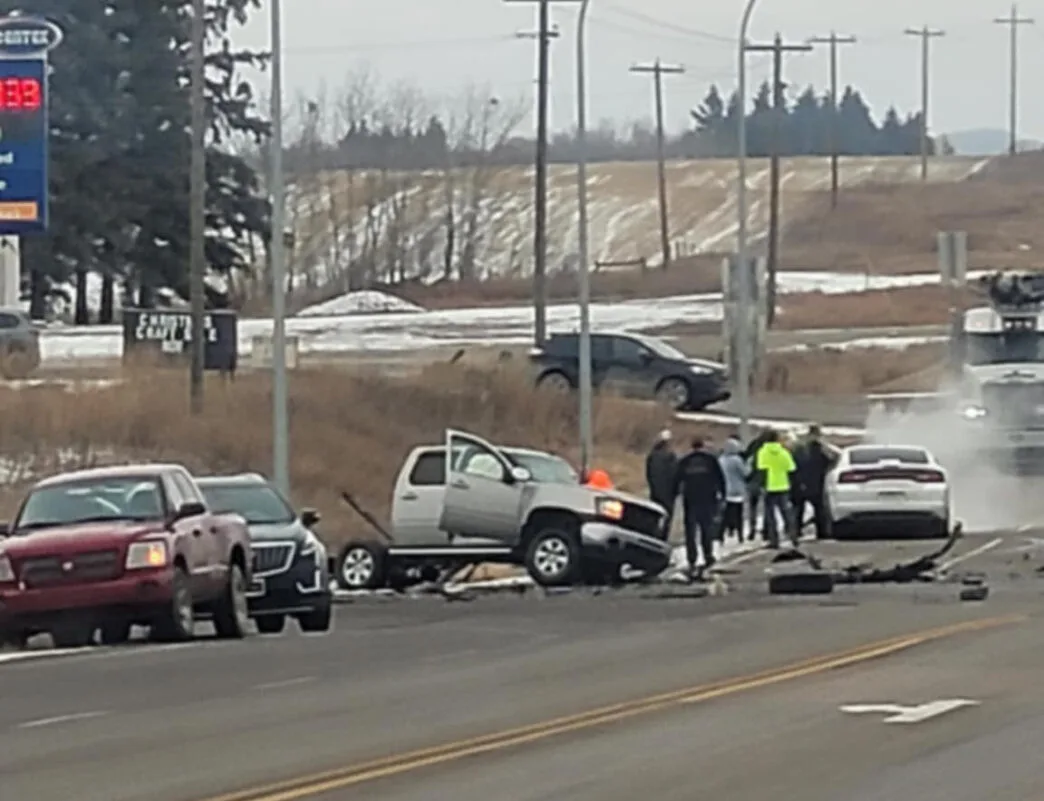
The crash happened at the junction of Highways 17 and 3 near Alcurve on Nov. 16, 2024. It involved multiple vehicles and was treated as a mass casualty event.
Two people died in the crash.
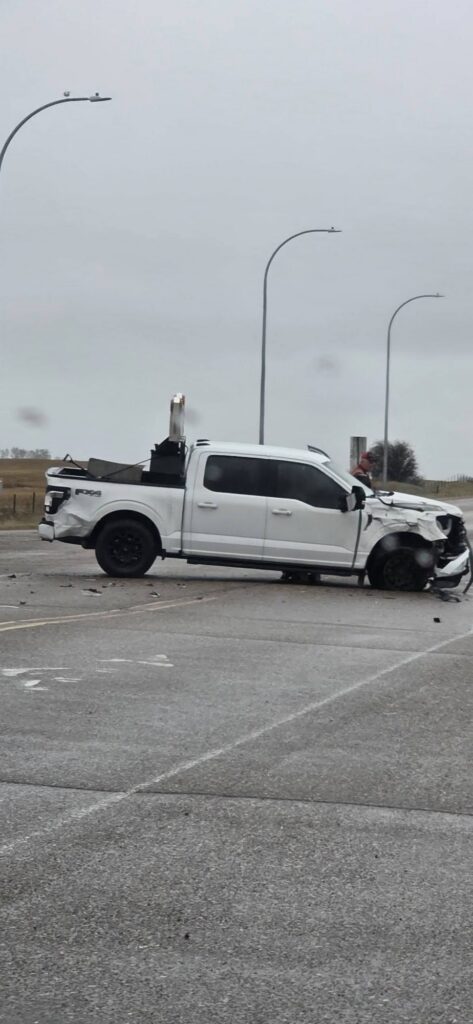
BorderPulse has previously reported on the criminal side of the same collision. A Saskatchewan man faces two counts of dangerous operation causing death in connection with the crash. Records obtained by BorderPulse showed his blood alcohol concentration measured more than twice the legal limit at the time.
He was not charged with impaired driving. A Civilian Review and Complaints Commission report, obtained by BorderPulse following a formal complaint, found Crown counsel concluded there was insufficient admissible evidence to proceed with that charge. The report did not explain what made the evidence inadmissible.
That criminal case remains before the courts and is entirely separate from the college proceeding against Ali.
The charges against Ali turn to a different question: what happened inside Lloydminster Hospital once patients were identified and began coming to the location.
Charge one: the diversion from Lloydminster hospital
The first charge centres on Ali’s role that day as both a treating physician and the area department lead for emergency medicine at Lloydminster Hospital.
CT imaging was unavailable at the Lloydminster hospital when the crash happened, according to the charge. A patient identified only as R.O. was among those hurt in the collision.
The charge alleges Ali told hospital staff, or otherwise led them to understand, that Lloydminster Hospital was on bypass. It alleges this characterization applied specifically because CT services were down, not because of any broader service failure.
It further alleges Ali specifically directed, or caused staff to understand, that R.O. should not be brought to Lloydminster Hospital and should instead be sent to North Battleford.
R.O. died while being transported by ambulance to North Battleford, the charge states.
The college alleges this was not an isolated lapse. It states Ali participated in discussions and meetings where he advocated that trauma patients needing CT imaging should go directly to a facility with CT capability, rather than first being assessed and stabilized at Lloydminster.
The charge alleges this position was inconsistent with Saskatchewan Health Authority policy.
Beyond the diversion decision itself, the charge alleges Ali failed in his leadership role. It states he did not ensure physicians and staff at Lloydminster Hospital had clear direction on how to manage trauma patients during CT outages, both as department lead and as the treating physician on shift.
The charge lists a series of bylaw provisions it alleges Ali failed to meet, including bylaws requiring physicians to consider patient well-being first, to take reasonable steps to prevent harm, to provide appropriate care across the continuum of a patient’s treatment, and to render appropriate assistance to a patient needing emergency care.
What the policy says
The charge cites Saskatchewan Health Authority policy CS-CP-0041, titled Management of Emergency Department and Acute Care Inpatient Service Disruptions in Community and District Hospitals. BorderPulse has reviewed the policy in full.
The policy took effect April 1, 2024, more than seven months before the collision.
Under the policy, a hospital’s emergency department is only considered to be in a formal service disruption when at least one of three things is missing: physician coverage, registered nursing coverage, or basic laboratory and radiography services.
The policy states directly that a disruption to radiography services alone does not, on its own, trigger an emergency department service disruption. A lab disruption alone does not trigger one either, provided a physician has been consulted, any inpatients are stable, and a contingency plan exists to get diagnostic testing another way.
The policy also sets out when a hospital may request an EMS bypass, meaning paramedics are directed to take patients elsewhere. It states this can only happen as a direct result of a declared service disruption, or in response to a mass casualty event under the health authority’s own emergency response codes.
A CT outage by itself does not appear to meet either condition under the policy as written.
The policy also spells out a specific process for coordinating patient transfers during any genuine disruption. It requires the sending physician to make direct physician-to-physician contact with the receiving physician, provide a full handover of the patient’s condition and care, and coordinate the transfer through the health authority’s System Flow Coordination Centre.
Charge two: the paramedic
The second charge involves a different patient brought to the Lloydminster emergency department the same day, also injured in the Alcurve collision. The patient was accompanied by a paramedic identified in the charge as V.S.
The charge alleges Ali was upset the paramedic had brought his patient to Lloydminster at all, and told him so directly.
It alleges Ali spoke to the paramedic in a manner that was scolding, disrespectful and dismissive. It states Ali would not listen when the paramedic tried to give a clinical handover report, and would not allow the patient to be moved off the ambulance stretcher and into a hospital bed.
The charge alleges Ali told the paramedic he would need to stay and wait to take the patient back.
The college alleges this conduct fell short of professional standards requiring physicians to communicate respectfully with other healthcare workers, to treat colleagues with dignity, and to support collaboration across the care team. It also cites bylaws requiring physicians to communicate with integrity and compassion, and to avoid conduct that is disruptive to the workplace or to patient care.
What happens next
No hearing date has been set. The college’s discipline committee will determine whether the allegations in either charge are proven, based on evidence presented at a future hearing.
Ali has not been found guilty of anything. The charges represent allegations only.
Where Ali practises now
Ali remains registered to practise medicine in Saskatchewan and Alberta. Alberta’s College of Physicians and Surgeons lists his practice location as Cure MD, a clinic in Leduc.
His Alberta registration shows no disciplinary history. According to sources he may still work inside the Lloydminster Hospital on occasion.
This is the second BorderPulse investigation tied to the Nov. 16 collision, following earlier reporting on the criminal case against the driver.
BorderPulse has made attempts to contact Ali, but as of publication, he has yet to respond. This story will be updated if he does.
Read more: Driver charged after Alcurve collision














So they can’t even do emergency services proprely now. What good are they for if they can’t be bothered to do emergency?