



An NDP Shadow minister and recovery advocate say province is offloading crisis costs onto cities.
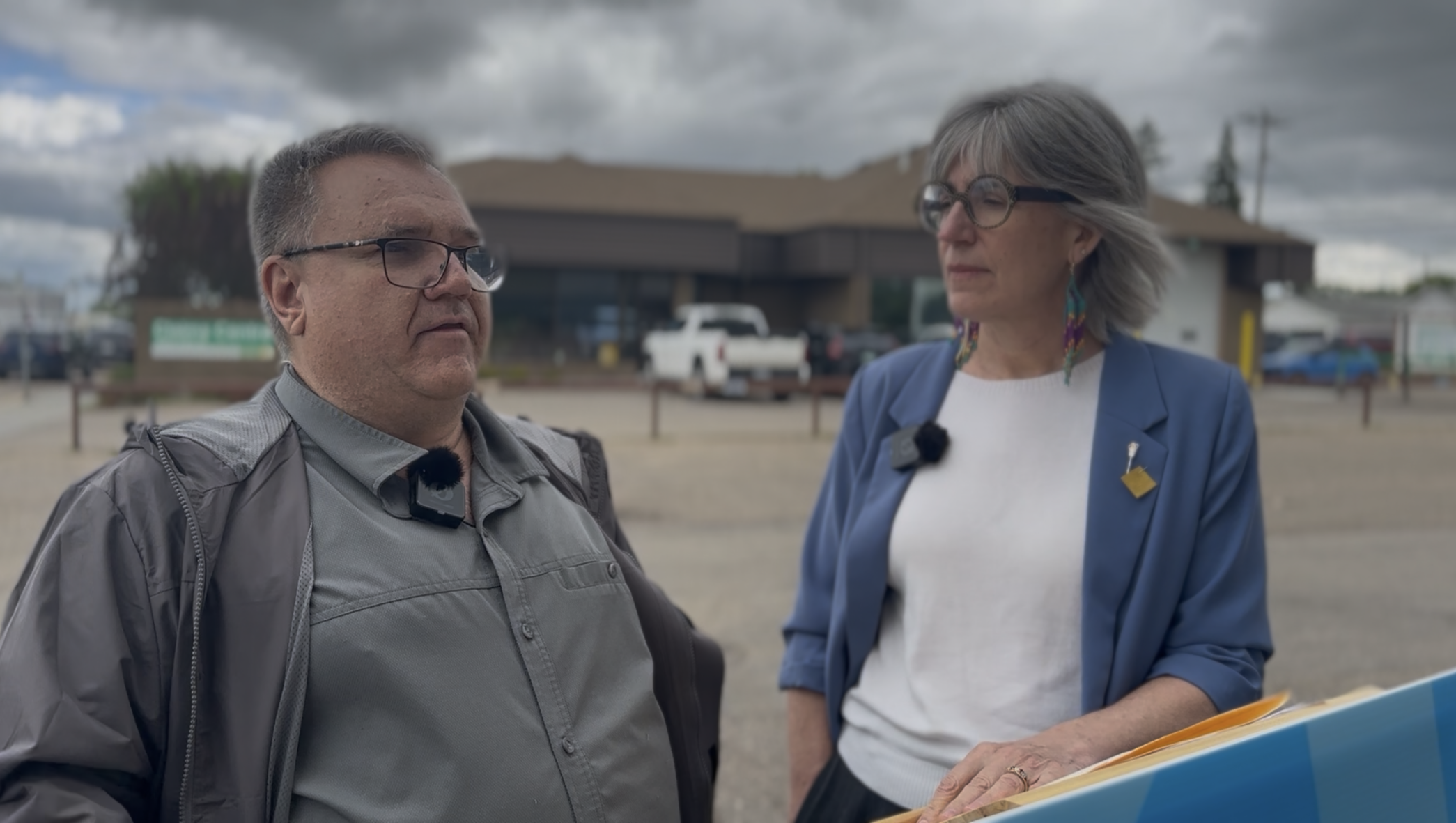
Saskatchewan NDP Shadow Minister for Government Relations Erika Ritchie visited Lloydminster Thursday to call on the Sask. Party government to invest in addiction treatment and mental health supports, saying communities like Lloydminster are being left to manage a crisis the province created.
Ritchie was joined by Tyler Lorenz, founder and executive director of Residents in Recovery Society, a Lloydminster non-profit that provides pre- and post-treatment sober living for people working through addiction. Lorenz said a six-month waiting list for beds at the centre tells the story plainly: people who want help cannot get it when they are ready.




“RCMP know where people need to go but there’s nowhere to refer people to,” Lorenz said.
“If they’re taken to hospital they’re released hours later because there’s nowhere for them to go. Everybody knows that these people need additional mental health and addiction supports but there’s nowhere to get them into.”
Lorenz said most people end up cycling back to shelters or the street, and that without somewhere to go, the pattern repeats until people give up on the system entirely.
He pushed back on what he called the government’s approach of spending on enforcement rather than treatment – pointing to encampment cleanups as money spent managing outcomes rather than causes.
“We don’t need things like encampment cleanups if people actually were able to, when they’re ready, get into a treatment program,” he said.
“You don’t need to force anybody into treatment. They all want to go at certain points. There’s just nowhere for them to go.”
Lorenz said the real cost argument cuts against the government’s position. Cycling people through policing, remand and hospital emergency departments already costs more than investment in treatment and housing would.
“We’re already spending the money,” he said. “It’s a matter of diverting those funds to a real solution rather than trying to address the symptoms.”
BorderPulse reporting has found the city’s Manager of Emergency Management told Lloydminster’s Governance and Priorities Committee that the city faces increasing impacts year after year with little investment in root causes from higher levels of government. The committee was told homelessness and social disorder cost the city approximately $3 million cumulatively in services including roads, public facilities and fire protection.
“Municipalities should not be forced to choose between fixing roads, funding fire services, or responding to a crisis that the Moe government has failed to address,” Ritchie said.
City council recently approved $325,000 for two new summer programs – one targeting encampment cleanup, littering and needle pickup, the other an enforcement and navigation unit to connect people in high-impact areas to recovery services.
Ritchie said that spending reflects a city filling a gap the province should be covering.
“Saskatchewan people deserve a government that rolls up their sleeves and meets communities where they’re at and comes up with real solutions instead of downloading their responsibility onto cities and property taxpayers,” she said.
The Sask. Party has governed Saskatchewan for more than a dozen years. In that time, Lloydminster’s addiction and housing crisis has grown while treatment capacity has not kept pace.
Lloydminster’s location on the Alberta-Saskatchewan border adds another layer to the problem. Lorenz described the jurisdictional tangle firsthand. Residents in Recovery was funded through the Saskatchewan government but licensed by Alberta, creating administrative barriers over which provincial beds residents from each side could access.
The benefits system compounds the situation. A person who uses a Lloydminster shelter on the Saskatchewan side can lose Alberta benefits immediately, then faces a 30-day wait before Saskatchewan benefits can be applied for – leaving a gap that makes securing even a rental deposit nearly impossible.
“These cross-border issues when it comes to our marginalized communities are devastating,” Lorenz said. “It’s just a barrier that doesn’t allow for them to ever get out.”
Ritchie said a Saskatchewan NDP government would seek to improve dialogue with its Alberta counterparts and work toward proportionate responsibility-sharing across both sides of the border. She said the party is committed to listening to frontline workers, service providers and elected officials rather than letting ideology drive policy.
On the Compassionate Intervention Act, passed in the most recent legislative session, Ritchie said the NDP put forward more than 30 amendments based on concerns raised by medical experts. All were rejected.
“It demonstrated a lack of openness to being collaborative and working to provide a workable path forward,” she said.
Despite the scale of the crisis, Lorenz was asked overall if the situation was better or worse.
“There are a lot of people on the streets of Lloydminster that are now clean, sober, working great jobs, paying taxes, raising families, for them, it is better,” he said. “As far as the actual crisis goes, I don’t think we’ve come a long ways.”
Read more: Alberta NDP talk care gap with Lloydminster seniors group