



This is the weekly opinion column by owner/founder of Border Pulse.
Sometimes we are really good as journalists pointing out the problems in society. It’s less often we are asked to point toward what might fix it. So today, three problems this region knows well, and ideas worth putting on the table. If you’ve got some, I want to hear it.
The volunteer well is running dry and getting older. Talk to anyone running a local fundraiser, a fair, a ribfest, or a Big Brothers Big Sisters program, and you’ll hear the same complaint. Where did all the volunteers go?




It’s not unique to Lloydminster. It’s a national trend. Canadians spend more than six hours a day online, according to data cited by Statista, much of it outside working hours. Imagine what even two of those hours a week could do for this community if they went to a cause instead of a scroll.
Many of the old excuses don’t hold up anymore, either. Some organizations now welcome volunteers who bring their kids along. Others have scaled back expectations so people know exactly what they’re signing up for before they show up.
One idea gaining traction elsewhere is the one hour workforce. No meetings. No registration. No annual dues. You show up, you help hang Christmas lights, cook steaks for a fundraiser, or load a truck, and you leave. One hour. No sign up sheet required.
It won’t solve everything. But it lowers the barrier to entry to almost nothing, and that might be exactly what gets people back in the door.
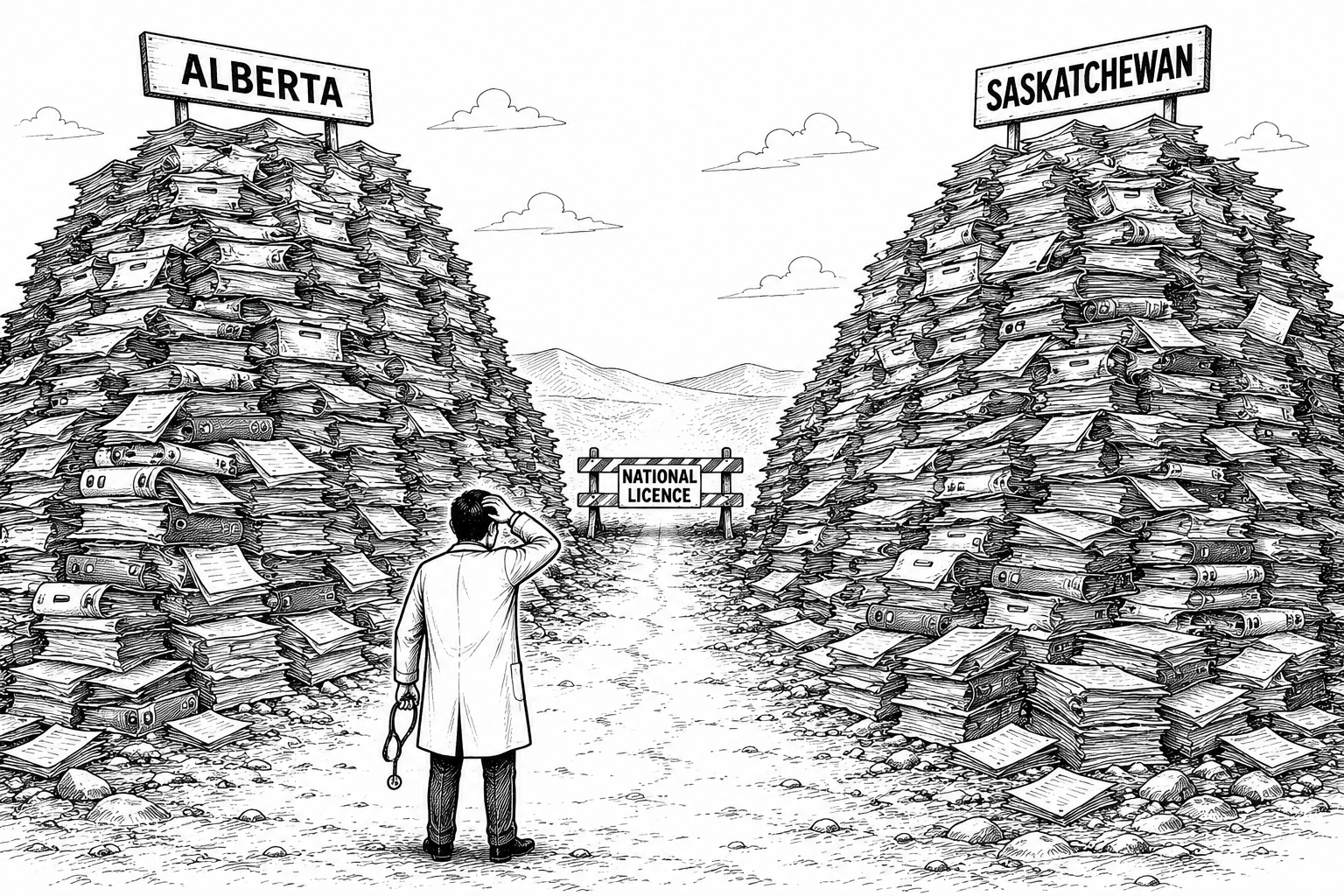
A licence that stops at the provincial line
The second problem surfaced hard over the past two weeks: the bi-provincial licensing mess that makes it needlessly difficult for medical professionals to work on both sides of the Alberta-Saskatchewan border.
This isn’t new. Recruiters were running into it as far back as the days of Vic Juba trying to bring physicians to Lloydminster. Why would a doctor choose a border city where the paperwork doubles for the same pay?
One idea, discussed quietly in health policy circles for years, is a national licensing standard for every medical role, from neurosurgeons to paramedics. Take the hardest provincial exam in the country and apply it nationally. Pass it, and you can work anywhere in Canada. No dual licensing. No upgrading requirements when you cross a line on a map.
It could also help attract talent from outside the country, people who are qualified, willing to work, and currently stuck navigating a patchwork of provincial rules instead of treating patients.
A wristband that could save a nightmare
The third problem showed up recently, in the kind of moment no parent or guardian wants to live through.
A child went missing at a large community event. The child was autistic and was scared. It ended safely. Not every version of that story does.
What is a solution to this situation? Wristbands? Apps? Trackers?
Holding people and institutions accountable means being willing to sit with hard questions. It also means being willing to hear solutions, even imperfect ones.
If you’ve got an idea for a problem this community is facing, whether it’s one of these three or something else entirely, send it my way. It’s easy to complain from the sidelines. It’s a lot harder to actually fix something.
That’s the challenge. Let’s see who takes it.
Read more: Guest Column – I hate the Time Change