




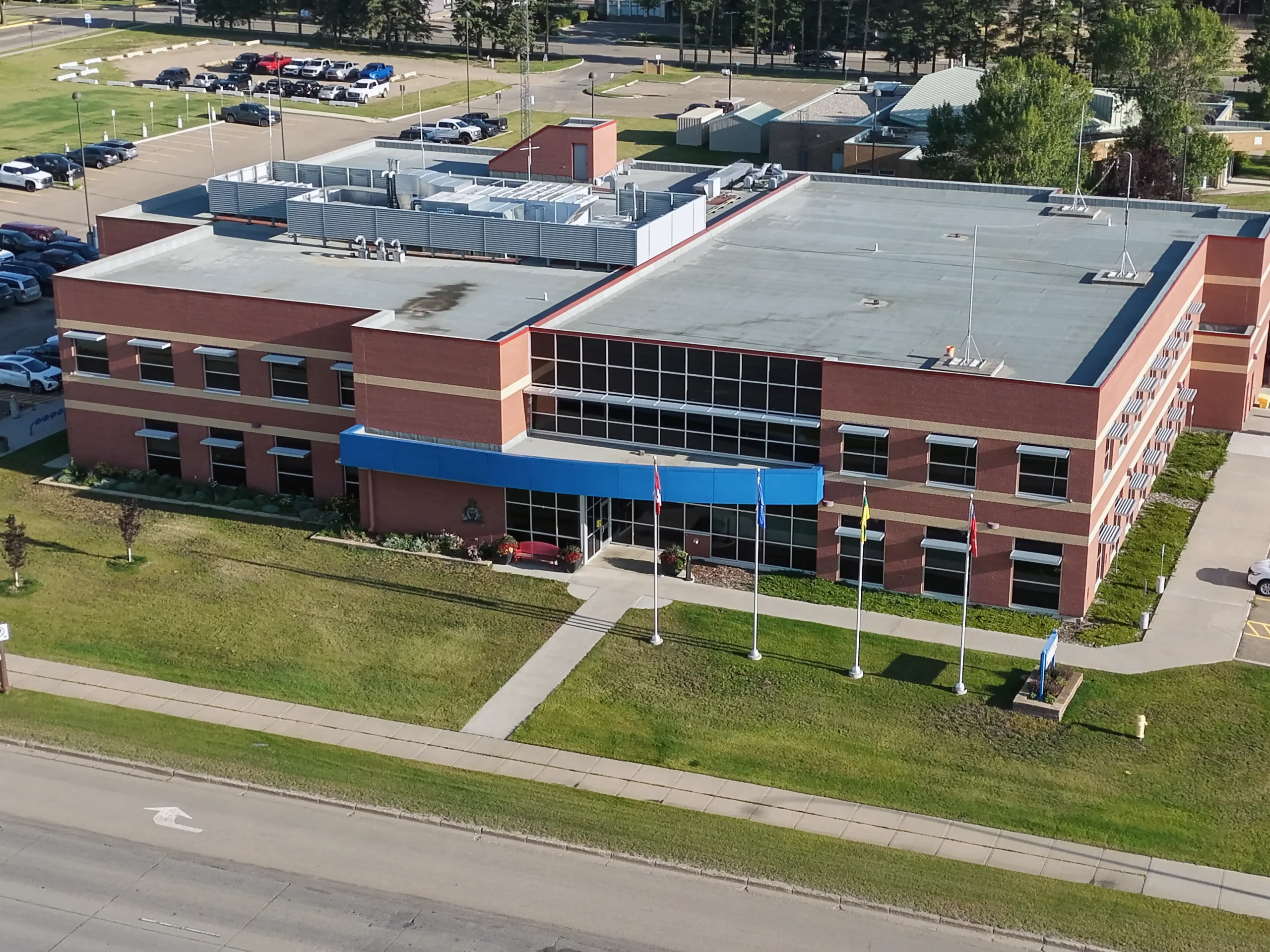
Not every investigation into downtown crime ends with charges laid, S/Sgt. Jerry Nutbrown told Lloydminster city council Monday, and the public often never learns why.
Nutbrown, who oversees the Lloydminster RCMP’s plainclothes crime reduction unit, told council some serious cases stall because officers cannot establish reasonable grounds, or because Crown prosecutors recommend against proceeding.
“Unfortunately for some of them, sometimes they end in no charges,” said Nutbrown. “I just wanted to make you aware of the fact that there are a number of those investigations that do happen that take our time that you won’t see a media release on.”
He offered one recent case as an example. While working downtown in plainclothes, he approached a man showing signs of fentanyl use and developed grounds to arrest him for possession. During the arrest, the man swallowed the substance, bag and all, then broke free and ran before being tracked down with a police dog and taken into custody.




“Unfortunately, in that instance, the courts aren’t really wanting us to proceed with possession charges,” said Nutbrown. He said he laid a resisting arrest charge instead, since the physical evidence was gone. That charge was later withdrawn by the Crown after the man missed his first court appearance.
“I can’t explain why,” said Nutbrown.
The Lloydminster RCMP’s General Investigative Section and Crime Reduction Unit is made up of 11 regular members and one municipal employee, split between serious, time-sensitive investigations and shorter-term campaigns targeting specific crime trends.
Nutbrown said the detachment has expanded its overtime program this year, logging about 240 hours of supplemental bike, foot and vehicle patrols, many in the downtown area, at a cost of roughly $30,000. The crime reduction unit has also run three enforcement campaigns in 2026, at a combined cost of about $50,000.
Close to zero tolerance on possession
On drug possession, Nutbrown described the RCMP’s approach downtown as close to zero tolerance.
“If we find anything on them, we will take it, we will seize it from them, because they are not allowed by law to have it on them,” said Nutbrown. “I know that is the messaging that is out there for us.”
Nutbrown also addressed a question raised earlier in the meeting about willingness to accept addictions treatment, telling council a person’s answer can shift within hours depending on where they are in a drug use cycle.
“If they’re just recently used, they’re feeling the effects of it, they’re likely not wanting much interaction with you at all,” said Nutbrown. “If they’re more on a down cycle where they can’t maybe find it, they don’t have the money to purchase it, they may be more willing, or generally they’re more willing to accept help.”
What residents can expect to see
Coun. Michele Charles Gustafson asked Nutbrown what residents should expect to see on the street from the crime reduction team, tying the question to the perception of safety downtown.
“Do we expect to see folks in patrol cars canvassing the area? Do we expect to see folks walking the beat?” asked Charles Gustafson.
Nutbrown said the answer is essentially all of the above. Marked units, uniformed officers on foot and, as of a recent training course secured by Insp. Brian Nichol, members now trained to patrol by bike.
“So for the visible part of that, it’s yes to everything,” said Nutbrown.
He said some presence will remain deliberately invisible. Nutbrown and other members sometimes work downtown in plainclothes, introducing themselves to business owners without a uniform.
“They then saw, oh, OK, well, OK, yeah, that’s who you are, which hopefully will help that even though I wasn’t in uniform,” said Nutbrown.
Charles Gustafson pressed on whether residents could be reassured during peak activity periods, asking if there were patterns the RCMP tracks.
“We’re not going to publish the schedule,” said Nutbrown.
He said the unit does track patterns tied to government benefit payment dates, which typically drive increased downtown activity, and adjusts deployment accordingly.
Working alongside the city’s enforcement unit
Nutbrown also outlined how his unit coordinates with the city’s Enforcement and Navigation Unit, the community peace officer and social worker pairing introduced this year, saying the goal is a consistent approach regardless of which uniform a person encounters.
“Honestly, for me, I hope that when they see either a CPO or RCMP, they just think it’s them,” said Nutbrown.
Charles Gustafson thanked Nutbrown for breaking down the complexity of enforcement work in plain terms for the public.
“I think the end result is that trust that you build with them,” said Charles Gustafson.
Read more: Downtown fight sends two to hospital