




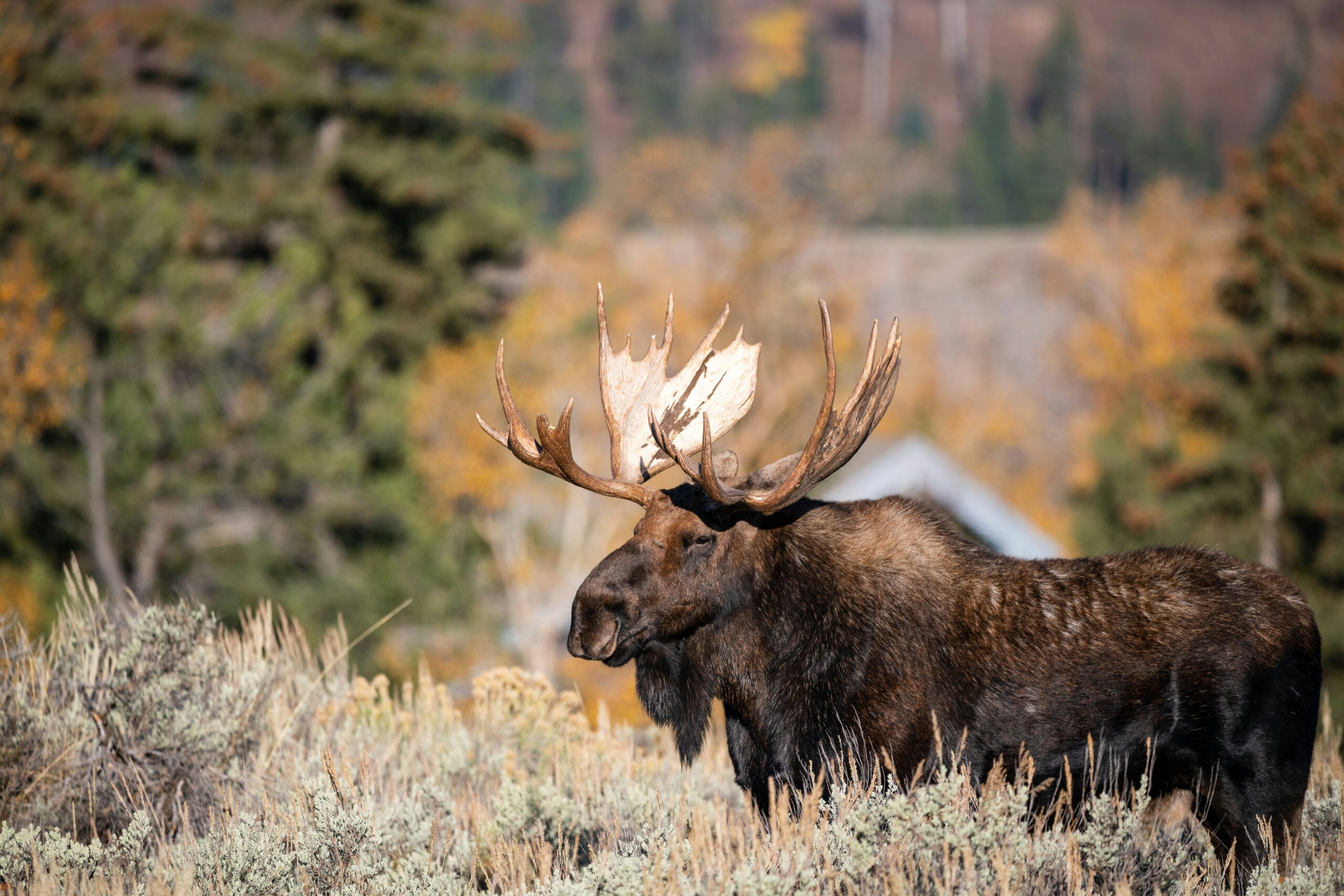
A Lloydminster-area woman escaped unharmed after a moose charged her last weekend, ducking into brush until the animal moved on. She had been outdoors and commented on a BorderPulse report of a lynx spotted in the area about crossing paths with a much larger problem.
Her question – asked publicly afterward – was simple: what do you do next time?
It’s one wildlife experts say more people should be thinking about this time of year.




Spring is prime time for moose aggression.
May through early June is calving season, when cow moose are extremely protective and will charge if they sense any threat to their calf. The Alaska Department of Fish and Game warns that if you see a calf on its own, you may have walked between it and its mother – a very dangerous place to be.
The woman’s instinct to find cover was exactly right, according to experts.
How close is too close?
There’s a simple field test anyone can use before they’re in trouble.
Alberta Parks recommends what’s known as the thumb rule: extend your thumb and place it in front of you, aligned over top of the animal. If the animal is completely covered, you are at a safe distance. If your thumb does not cover the animal, slowly begin to retreat.
Parks Canada recommends staying at least 30 metres away from moose at all times.
Even that may not be enough if the animal is agitated. Kristine Rines, a wildlife biologist and director of New Hampshire Fish and Game’s moose program, puts it another way.
“You should be far enough away to get behind the nearest tree before a galloping horse could get there,” said Rines.
Her rule of thumb: if you are causing the oversized herbivore to change its behaviour in any way, you are too close.
Know the warning signs
Moose often signal aggression before they charge. According to wildlife biologists, warning signs include ears laid back, hair standing up on the neck or shoulders, and licking or smacking their lips. A moose might also lower its head, grunt, stomp its hooves, or show the whites of its eyes.
Sometimes, though, there are no warning signs at all.
Lee Kantar, state deer and moose biologist with the Maine Department of Inland Fisheries and Wildlife, says the window to react can close fast.
“They can whirl and be on you in a second if they feel you’re too darned close,” said Kantar.
The Alaska Department of Fish and Game notes that many charges are bluff charges – warnings to stay back. But they still need to be taken seriously.
If a moose charges
The advice from wildlife authorities is consistent: run, and get behind something solid.
The Government of Alberta advises anyone charged to run as fast as possible and find a car, tree, or building to put between themselves and the animal. As the Alaska Department of Fish and Game notes, you can run around a tree faster than a moose can.
If the animal knocks you down before you reach safety, do not fight. Curl into a ball, cover your head, and stay still. Wildlife biologists say they typically stop attacking once they believe the threat has been neutralized. Do not attempt to get up until the moose has moved a safe distance away – getting up too soon can trigger a second attack.
Dogs make it worse
If you have a dog with you, the risk increases significantly.
The Government of Alberta warns that a moose will sometimes go out of its way to kick at a barking dog – moose view dogs as a threat because they resemble wolves, their primary natural predator. Keep dogs leashed and under firm control in any area where moose may be present.
What not to do
Do not yell at a moose or throw things to scare it off. Never approach a calf that appears to be alone – its mother may have temporarily left it in a safe spot and may not be far away.
According to Parks Canada, moose are responsible for more injuries in Canadian national parks than bears – a fact that surprises many people who assume they are slow-moving and passive.
Anyone who encounters an aggressive moose in Alberta can contact Fish and Wildlife at 310-0000. Saskatchewan residents can reach the Turn In Poachers and Polluters line at 1-800-667-7561.
Read more: Lloyd Rescue Squad responds to vehicle vs. Moose