



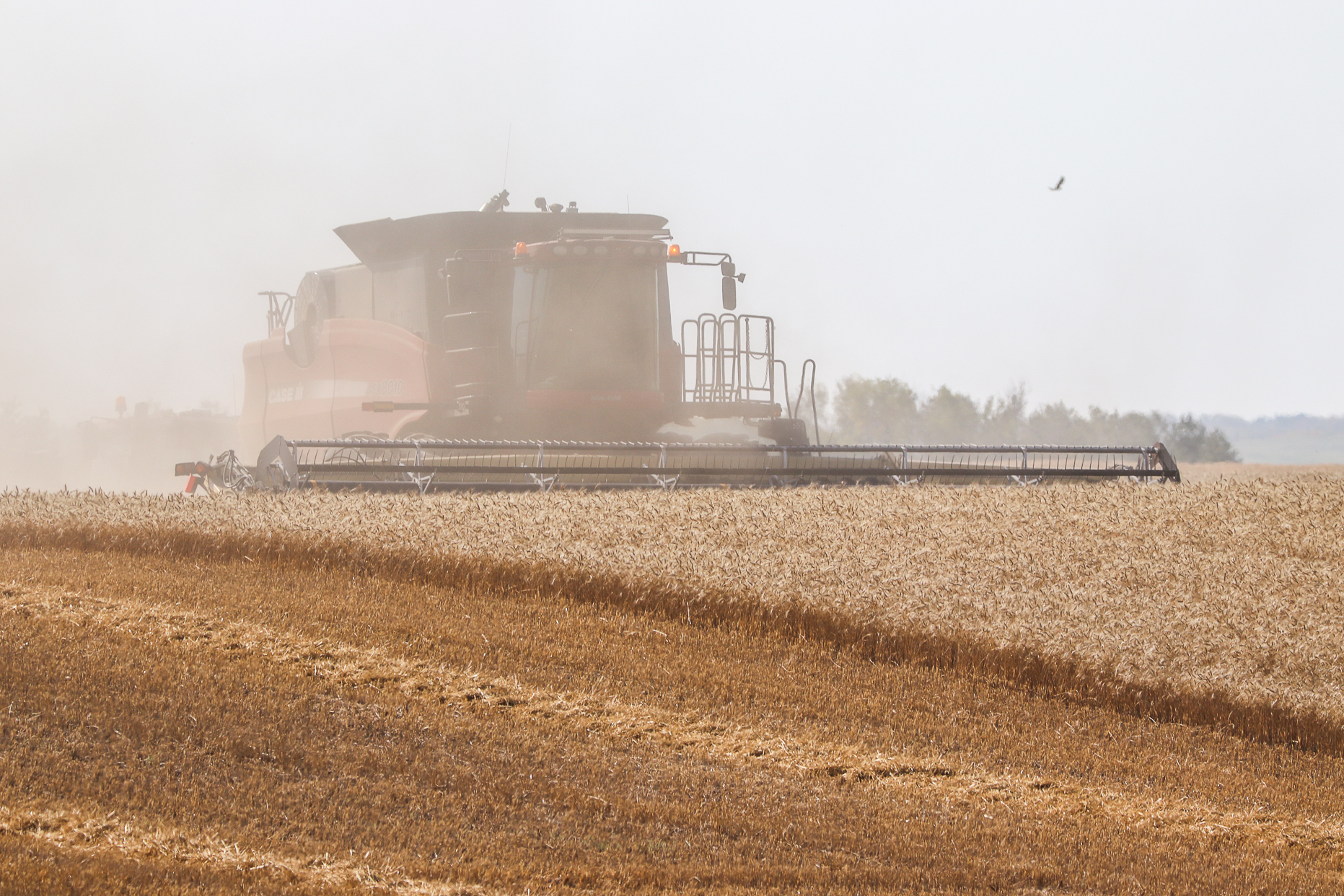
Farmers and equipment dealers around Lloydminster now face higher costs on U.S.-made machinery parts, after new federal counter-tariffs took effect Sept. 8, in the middle of harvest season.
The tariffs kicked in at 12:01 a.m. Tuesday. They match United States levies dollar for dollar, after trade talks between the two countries broke down Aug. 22.
Canada’s counter-tariffs apply to $27.6 billion in imports from the U.S. They cover steel, dairy, appliances, agricultural equipment, pulp and paper, and electronics.




The tariffs range from 15 to 50 per cent on more than 700 American goods.
For the Lloydminster region, the timing lines up with the start of Prairie harvest. Parts for harvesting and threshing machinery, along with agricultural mowing equipment, fall under a 15 per cent tariff. Farm wagons, freight trailers and commercial semi-trailers face a 25 per cent tariff.
Forklifts carry a 15 per cent tariff. Hydraulic jacks and vehicle hoists carry a higher 25 per cent tariff.
The tariffs apply only to goods considered U.S.-origin under Canadian trade rules. An American brand name alone does not make a product subject to the tariff.
Steel carries the widest local impact. Canada doubled its duties on U.S. steel and aluminum to 50 per cent Sept. 8. That matches an earlier U.S. tariff on Canadian steel and aluminum. Steel from Canada or other countries is not affected.
That matters in an oil and agriculture economy built on fabrication shops, grain bins, farm repairs and industrial construction. Businesses that rely on U.S.-origin steel now face a choice: pay the tariff or find another supplier.
Alberta Premier Danielle Smith has criticized the tariffs since they were announced.
“We shouldn’t be cheering if our farmers have to pay 50 per cent more,” said Smith.
She was referring to costs farmers face for the equipment they need to grow food.
The Alberta Federation of Agriculture is warning the tariffs add another layer of cost onto farmers. It says weather, input costs and supply chain pressure are already squeezing margins.
In Saskatoon, Full Line Ag owner Terry Swystun said he had hoped trade talks would succeed. He now wants to see more of a push for farmers to buy Canadian-made equipment.
Ottawa paired the tariffs with a $7.5 billion support package for workers and businesses. That includes new Regional Tariff Response Initiative funding for Saskatchewan manufacturers, among other measures.
BorderPulse has reached out to Lloydminster area equipment dealers and fabrication shops for comment on how the new costs are landing locally. This story will be updated with their responses.
Read More: Food prices up, farmers’ share down according to APAS report













In theory. Most equipment would be in Canada aside from repair parts (potentially) so unless they were ordering a new item after September 8th it should not be impacting them immediately. In Lloydminster many are part of the community harvest.